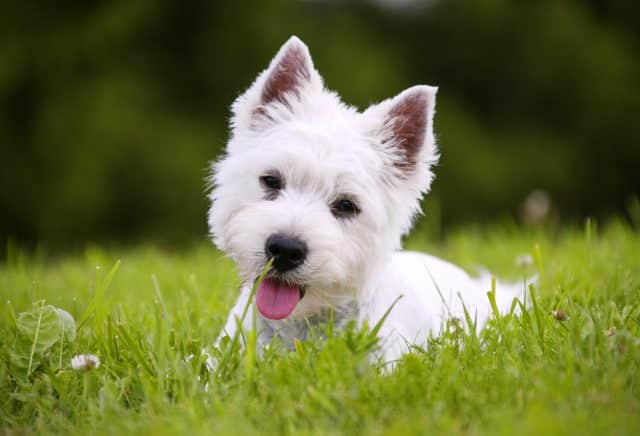
The West Highland White Terrier
A small but fiesty dog breed

Small white dogs with dark eyes and noses seem to be a theme these days. In our Winter issue, we discussed the Bichon Frise. Here for Spring we have another breed that seems superficially not all that different, but which in the flesh is as distinct as chèvre from marshmallow spread.
The West Highland White Terrier (or Westie) is closely related to both the Cairn and Scottish Terriers. All three breeds were derived in Scotland from the same stock, known variously in early times as Highland, Skye or Scottish terriers.
The name terrier derives from the Latin terra, or earth. All the terrier breeds are descended from dogs originally used for hunting ground animals considered pests by landowners and farmers. A 1774 quote attributed to an Oliver Goldsmith describes the terrier as “a small kind of hound, with rough hair, made use of to force the fox and badger out of their holes; or rather to give notice by their barking, in what part of their kennel [den] the fox or badger resides, when the sportsmen intend to dig them out.” The short-legged terriers in particular were bred to follow animals right into their dens. There, they needed great courage and gameness (an unwillingness to back down) to successfully face off against their cornered quarry. In a 1910 article in The Field, Mrs. Lionel Portman wrote: “Badger digging is, undoubtedly, the supreme test of a working terrier.”
Rabbiting improves his nose and condition. Ratting combines business with pleasure. But to find a badger deep in the labyrinths of a large earth, and to stick to him, possibly for hours together, baying and sniffing at him so that he has no time to dig-a thing he can do much faster than two men-is a task requiring perserverance, grit and stamina of the highest order.” These were working dogs, and they needed to be tough.
Grisha Bruev/Bigstock
While white individuals did occur, the original hunting dogs of the Highlands were more typically sandy (like many Cairns) or black (like Scotties) in colour. Whites were often viewed as less game and hardy and were sometimes culled. But during a hunt around 1860 or so, a favourite brown terrier of Colonel E.D. Malcolm of Poltalloch, Argyllshire, was mistaken for prey and shot. From then on, all the dogs propagated in Col. Malcolm’s kennels were to be white so that similar incidents could be avoided. Eventually the colour was bred out of the lines. The little white short-legged dogs were known as Poltalloch Terriers after the family estate, and Col. Malcolm is still recognized as the first fancier to breed the whites true.
The modern breed, however, was certainly not exclusively derived from that one source. There was much interbreeding; and similar scruffy short-legged white terriers, some known as White Scottish Terriers and others as Roseneath Terriers, were developed in parallel elsewhere in the region. The various kennels competed avidly at shows, and certainly many keen fanciers concerned themselves primarily with the pleasures of the field.
Most terriers still have a great deal of the hunter in them. Some are never let off leash because of their owners’ fears that they will disappear down a hole or along a game trail and “forget” to come back. Earthdog trials are a modern-day attempt to reproduce some of the conditions of the hunt in order to permit Westies and other small breeds to pursue their original function under more controlled circumstances. Tunnels are prepared and rats placed in secure cages at their ends. Among other things, the dogs are scored according to their willingness to enter the tunnels and their degree of fixation on the caged rats at the end. (They’re not able to touch the cages, though it’s unlikely the rodents realize it at the time.)
The Westie was first shown in the U.S. at the Westminster Show in 1907 under the name Roseneath Terrier, but the name was soon changed to West Highland White Terrier. Since its introduction to North America, the breed has consistently commanded a loyal following among humans: AKC registration statistics rank it 45th as of 2022.
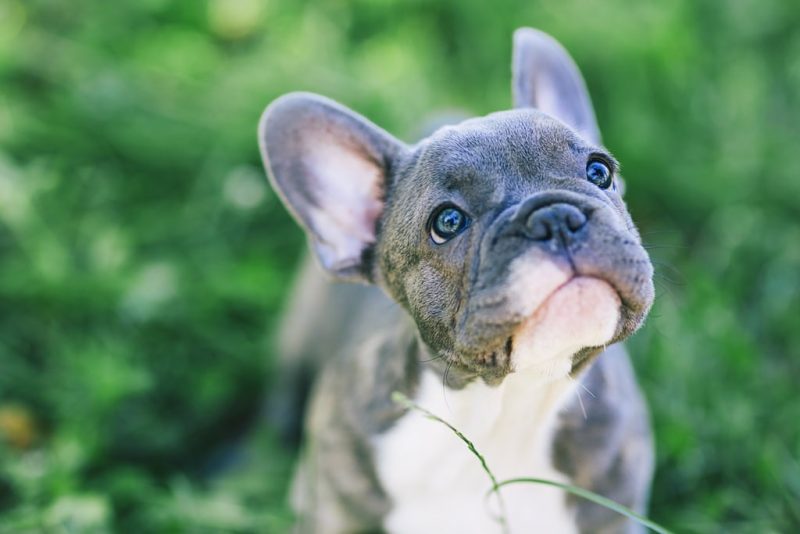
Most Popular Dogs in the US
According to the most recent AKC registration statistics (2022)
[1] French Bulldog
[2] Labrador Retriever
[3] Golden Retriever
[4] German Shepherd
[5] Poodle
[6] Bulldog
[7] Rottweiler
[8] Beagle
[9] Dachshund
[10] German Shorthaired Pointer
[45] West Highland White Terrier
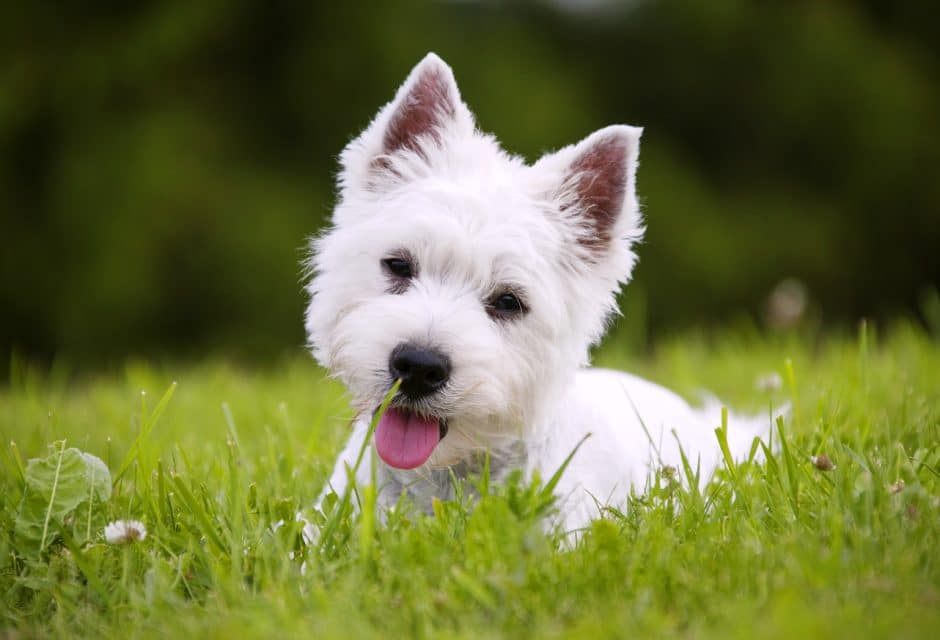
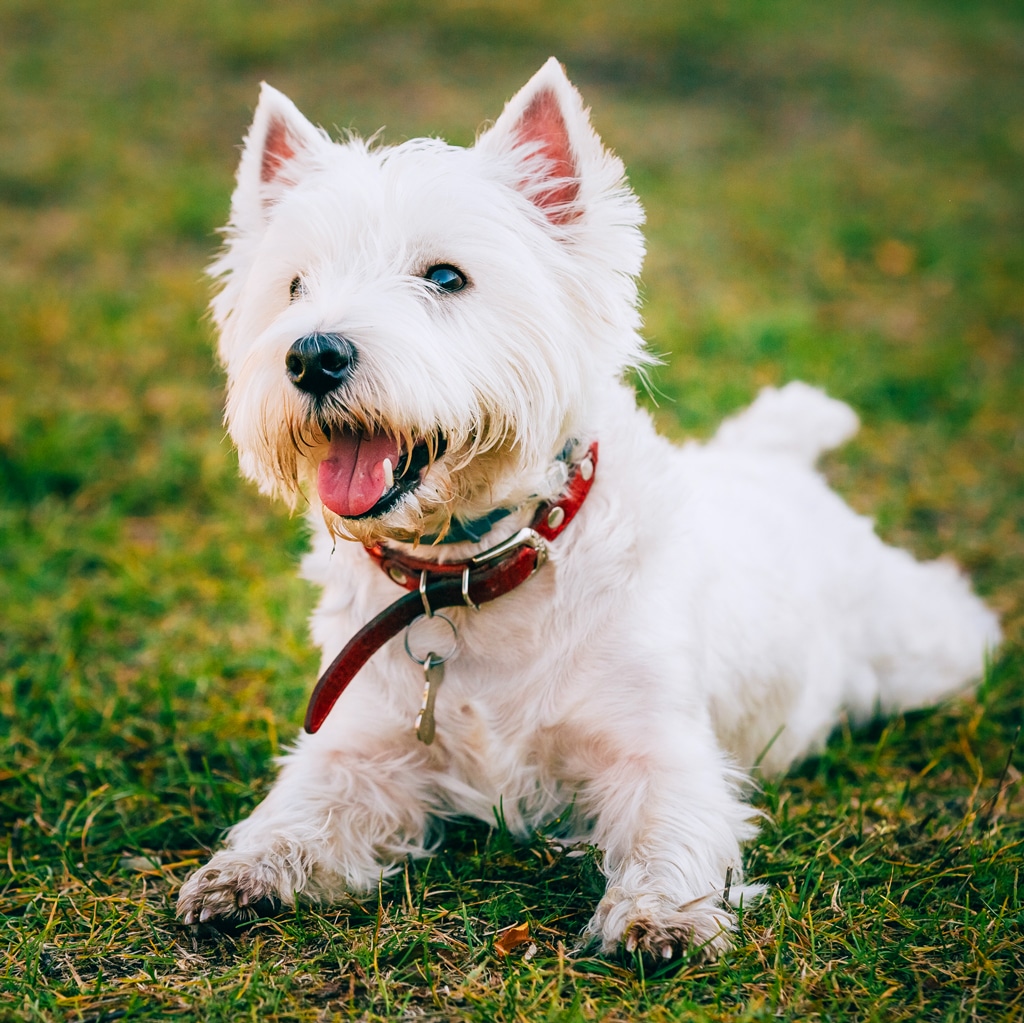
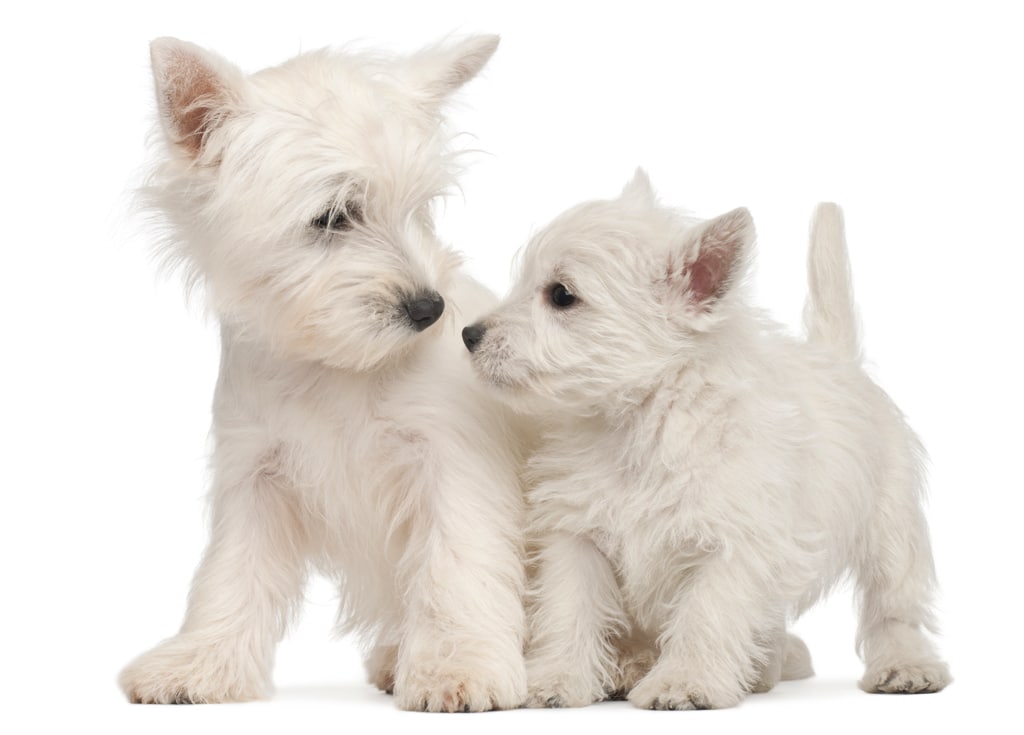
In keeping with the breed’s original function, the AKC West Highland White Terrier breed standard calls for a “small, game, well-balanced, hearty-looking terrier, exhibiting good showmanship, possessed with no small amount of self-esteem, strongly built, deep in chest and back ribs, [with a] straight back and powerful hindquarters on muscular legs, and exhibiting in marked degree a great combination of strength and activity.” Ideal heights at the withers are 11 inches for males and 10 inches for female. The eyes are dark brown with an expression “piercing, inquisitive and pert.” Nose and lips are black.
The Westie’s coat is a double coat, with an outer layer consisting of about two inches of coarse, straight hair and an inner layer consisting of a soft, close undercoat. The colour is invariably white. Regular visits to a grooming salon are necessary, where the coat may be stripped, thinned or clipped depending its nature, owner preferences, and whether or not the dog is to be shown. Brushing between grooming salon visits to prevent mats and tangles in the undercoat is advised. This breed is known for skin problems and a variety of other health conditions, so careful choice of breeder is important.
Life on White/Bigstock
Terriers are not generally known as quiet dogs, and in his book The Complete West Highland White Terrier (4th ed., 1977) John T. Marvin writes, “We can expect today’s Terrier to enjoy a lusty bark when conditions demand; it is his heritage.” As hunters underground the dogs were expected to indicate where they were situated, so the men above knew where to start digging. Yet the breed is generally of high intelligence (even if this is characteristically coupled with a healthy dose of Mind-of-his-Own or “stubborness”) and most individuals are quite able to judge correctly when conditions truly do demand.
The Westie temperament is a typical terrier temperament, described in the AKC standard as “alert, gay, courageous and self-reliant, but friendly.” In 1968, Norman H. Johnson wrote: “The West Highland White Terrier is highly individualistic, charming, playful, with a sense of importance and self-love. He has no fear either of animals, people, or the elements.
Adaptable to any temperature and any terrain, he is good as a general pet but not in an apartment with children. His shedding can be a nuisance; the white hair is very noticeable on furniture and rugs. He is a one-man dog and should be trained early.”
These fellows are little but they are disinclined to back away from challenges, and require positive yet firm training and early socialization with both humans and other dogs. Their friendly but confident nature and small size make them fine therapy dogs, and they are excellent companions in the home. Though they originated as hunters, their exercise requirements are not excessive and they can live quite happily in apartments-and with children, provided both dogs and people are properly educated-despite Mr. Johnson’s pronouncement.
Unlike our friend the Bichon Frise, however, these fellows are unlikely to want to spend much time sitting still in your lap.
» Read Your Breed For more breed profiles, go to moderndogmagazine.com/breeds
Join the newsletter and never miss out on dog content again!
"*" indicates required fields
By clicking the arrow, you agree to our web Terms of Use and Privacy & Cookie Policy. Easy unsubscribe links are provided in every email.
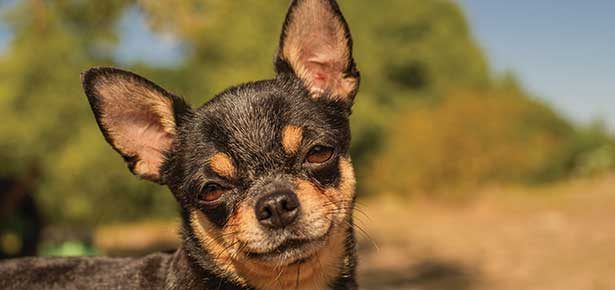
Say hello to the Russian Toy, one the of the AKC’s newly recognized dog breeds in 2022