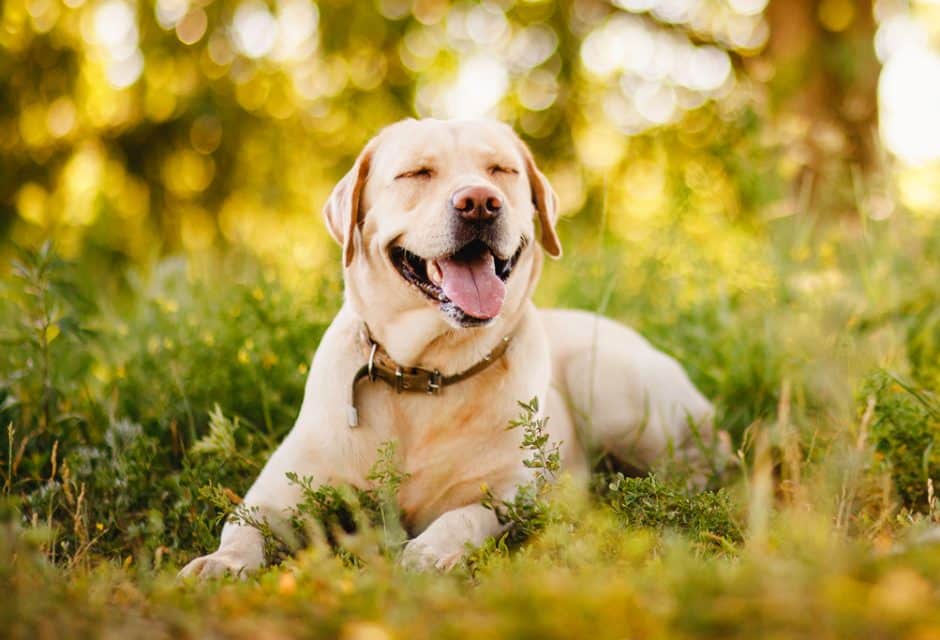
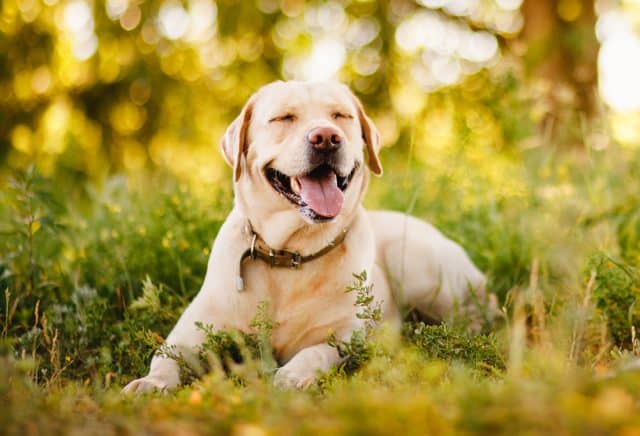
The Labrador Retriever
An affable athlete, a strong and versatile dog

It doesn’t take many trips to a dog park or beach to figure out out which dog breed is ranked most popular in North America today. Statistics from the American Kennel Club (AKC) for 2002 and 2003 show almost three times the number of Labrador Retriever registrations over the second-ranked breed, the Golden Retriever.
The high popularity of the Lab is due in large part to its great versatility combined with a typically easygoing, amiable temperament. In her 1964 book The Complete Labrador Retriever, Helen Warwick wrote, “The ideal Labrador temperament is one of a kindly, outgoing, adaptable nature, anxious to please and non-quarrelsome with man or beast.” The statement is as true today as it was then. Developed originally as a gun dog, the Labrador is now widely thought of as the ideal suburban family dog. Small children? The Lab will offer his back for standing practice. Little time for training? He may knock things over in his enthusiasm to see his people, but he will forgive, and forgive again.
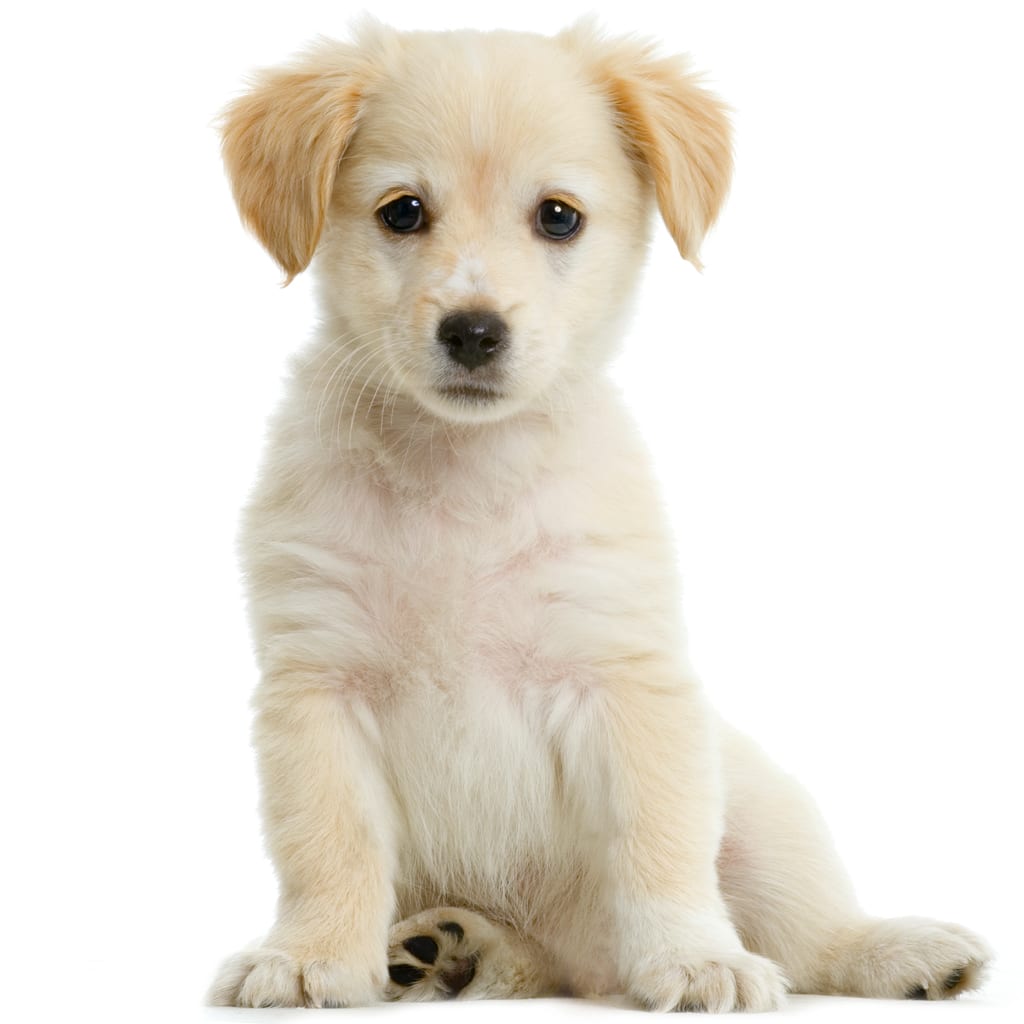
Life on White/Bigstock
The Labrador’s precise history is a matter of debate. It is clear that dogs were imported to England from Newfoundland beginning in the early 1800s, and that formal, controlled development of the “breed” occurred in Britain under the auspices of hunting men who wanted a good, all-around, rugged and versatile retriever. Whether or not the Lab is a diminutive derivation of the larger, hairier Newfoundland is open to debate. (Perhaps the Canine Genome Project will resolve this issue satisfactorily some day.) Early documents refer to a number of “water dogs” associated with the Newfoundland fishery, but names for the types were not used consistently and there exist few, if any, drawings. Sea captain and avid sportsman Peter Hawker wrote in 1816, “Every canine brute that is nearly as big as a jackass, and as hairy as a bear, is denominated a fine Newfoundland Dog. Very different, however, is both the proper Labrador and St. John’s breed of these animals; at least many characteristic points are required to distinguish them.”
Form follows function, and an ideal dog developed specifically to help rescue drowning sailors would be quite different from one developed to help hunters retrieve downed birds in a salt marsh. Certainly to maximize utility in what must have been an exceedingly harsh life, the early Newfoundlanders would have attempted to propagate certain distinctive, useful traits in their dogs. Yet in the seaports, all of those early dogs would have interbred relatively indiscriminately, so the types were probably all fairly closely related to begin with.
Whatever the original genetics, it appears to have been relatively easy for early breeders in Britain to “fix” the type for the Labrador Retriever (lending credibility to claims of Canadian origin, despite the fact that there were no kennel clubs in the colonies). Early descriptions consistently mention a sturdy, medium-sized dog, with an excellent nose and a keen love of water, typically all black, with a close, tight coat that could shed water, and an otter-like tail.
Kept primarily in private shooting kennels, the type was largely unknown to the general public until the end of the nineteenth century. While it was being developed, some breeders mated their “Labrador Dogs” with pointers or hounds; others carefully attended to “purity,” periodically importing new stock directly from North America. In 1916, the Labrador Retriever Club was formed in London and the first official breed standard was drafted. In the late 1920s some wealthy Americans, perhaps wishing to pattern themselves after the British gentry, began to import Labrador Retrievers from Britain. They had their own locally developed gun dog, the tough and rugged Chesapeake Bay Retriever, but presumably rarity connoted prestige just as fully then as it does now.
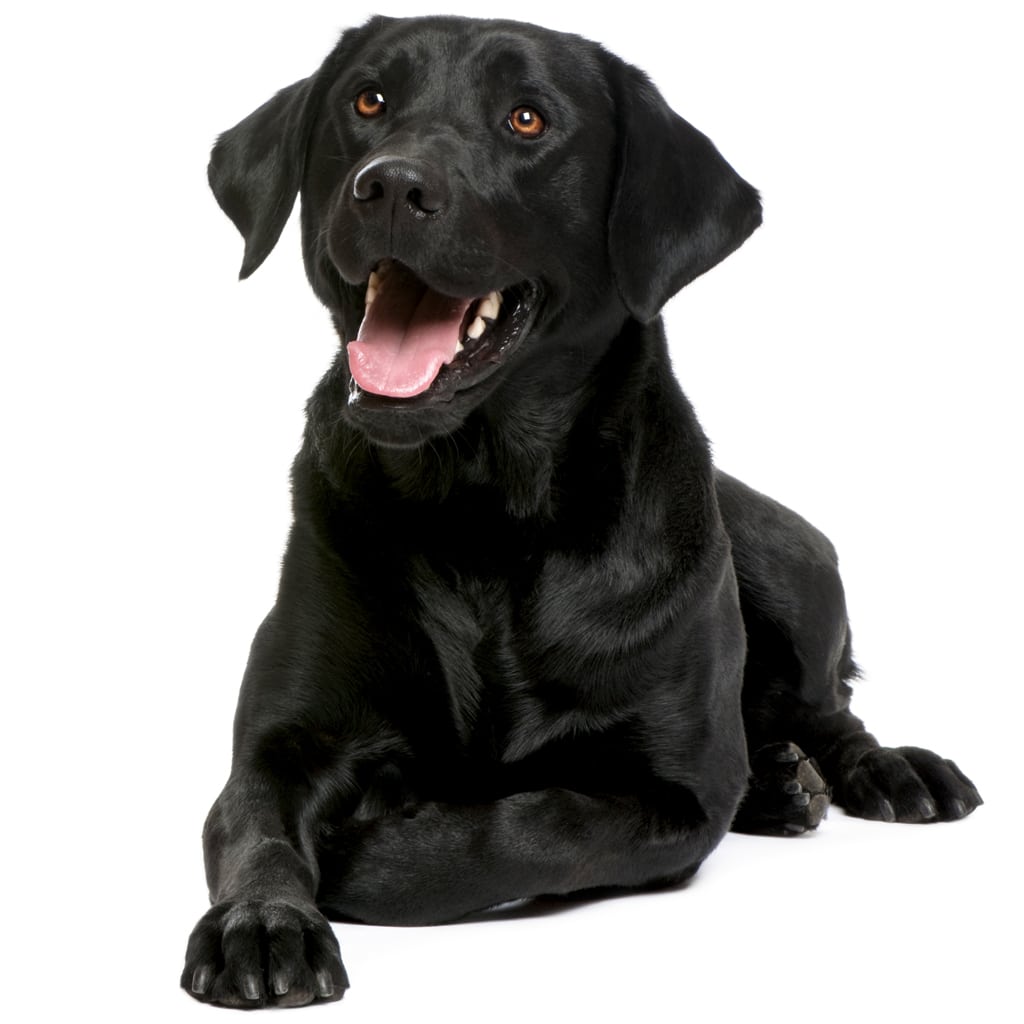
Life on White/Bigstock
The Lab had re-crossed the Atlantic. The first AKC breed standard was identical to the British Kennel Club standard. Since then, however, the U.S. and British standards have diverged slightly. Most significantly, the AKC standard now allows for greater variation in size, 22.5-24.5 inches at the shoulder for males, whereas the British standard constrains height to 22-22.5 inches. (For females, subtract an inch from the U.S. and a half-inch from the U.K. numbers.) The difference leads to American-bred dogs being, on average, somewhat larger than their British counterparts. The U.K. standard specifies height alone, but the AKC standard specifies the approximate weight of working-condition dogs as 65-80 pounds (females 55-70 pounds). The three accepted coat colours are solid black, yellow or chocolate (or liver), with a small white patch permitted on the chest. Yellow can range from light cream to “red fox.” Coat colour is genetically controlled by two genes. It is a shedding coat, a double coat, thick and profuse, with a certain amount of oil to bestow water repellency. If not bathed regularly, a Lab’s coat will begin to smell “doggie” fairly quickly; regular swimming or bathing is advised. (This is often a non-issue, though, as it’s typically difficult to keep these guys out of the water.)
One of the striking characteristics of the Labrador Retriever is the breed’s incredible versatility. Not only are these dogs versatile in the hunting world-working equally happily with pheasants or ducks, in dry uplands or frigid salt marshes-but they are also commonly used in service as seeing-eye, assistance and therapy dogs. Their size, strength and easygoing disposition make them highly dependable partners in a wide range of activities. Their keen noses, intense ability to focus, and willingness to please also make them popular choices for drug sniffing, mine detection, arson investigation (searching for the presence of accelerants) and search and rescue. In the competitive world, Labs will apply themselves with drive and enthusiasm in obedience, tracking, agility and field trial work.
And, of course, Labs make great pets and companions. But the breed is not for everyone. A young Lab requires regular exercise and space to run around, and firm, positive education, or that otter-like tail will be sweeping everything off the coffee table and that big, muscular butt will be knocking over the lamps and plants (not to mention wobbly toddlers). Without proper training, a young Lab’s sheer strength and enthusiasm can be overwhelming. Ignore him, banish him, forget him-he will still love you and forgive your inattention, and is unlikely ever to become aggressive or mean. However this makes it easy for an owner to neglect a dog’s needs in the pressure to meet all the time demands of modern life. Even if he is mellow enough not to be pushy about it, don’t go out and get a Lab unless you are prepared to meet the needs of a high-energy breed developed to plow through densely tangled vegetation, churn through icy water, search around diligently to find what he’s looking for, and charge back and ask, “What’s next?”
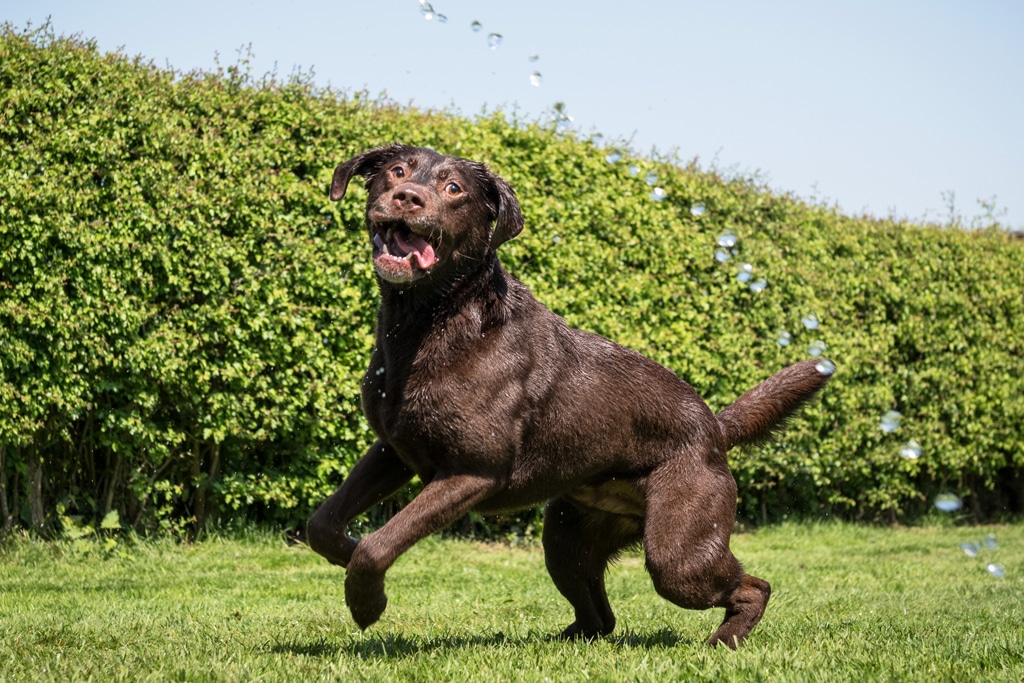
Nigel-Kirby-Photography/Shutterstock
Some Labrador breeders tend to focus on working (or “field”) abilities; others more on show (or “bench”) potential. The lines can be quite distinct, and prospective buyers need to enquire as to the main objectives of any breeding program. Field dogs tend to be bred more for drive and working ability, bench dogs for looks. As with any breed, it is important to research breeders, ask lots of questions, and be prepared to walk away from even the cutest puppy.
Do Labs have “webbed feet”? Yes they do; all dogs have webbing between their toes. What Labs do have in particular, however, are big feet, which no doubt serve them well when paddling around in the water. One trait that many people seem to notice is that Labs sure love their food. They are ultimate foragers. If he once found a french fry somewhere, you might drive back two years later and have your dog surge out of the car to re-check the hot spot.
“Willingness to please” is often dependent on whether or not there is an opportune food source around. Knowing it’s a no-no, many Labs happening upon a bonanza of illicit food will set to and inhale as much as possible before their humans can arrive on the scene to stop it. In his 1968 book On Retrievers, the renowned field trial trainer Charles Morgan described one of his three National Champions: “[She] was lazy, indifferent, a slow swimmer and not too fast a runner. About all that she did fast was eat.” This may be somewhat of an exaggeration-no doubt we can all think of individuals of other breeds who worship just as fervently at the food bowl altar-but Labs can easily pack on way too much weight if their intake is not closely watched. The breed is also prone to hypothyroidism which, if left untreated, can lead to obesity. (Hypothyroidism is easily treatable.)
As with all breeds, owners should be careful to balance food intake with appropriate exercise, keep their dogs’ weight down to a healthy level, and consult a veterinarian if there are any rapid or unexplained changes in weight. Some authors feel that the best Labs fail to compete well in dog shows simply because they are too laid back to compete with the “dash and flash” of certain other breeds. Be it so, this is what makes them excellent and reliable family dogs.
The Labrador Retriever is the ultimate natural, all-purpose utility dog: strong, active, agile and enthusiastic. Hungry, yes. But its popularity is well deserved. Versatile and amiable, this dog will push through any obstacle to do the right thing. All he needs is to be educated as to what that “right thing” is, and you’ll have a wonderful companion.
» Read Your Breed For more breed profiles, go to moderndogmagazine.com/breeds
Join the newsletter and never miss out on dog content again!
"*" indicates required fields
By clicking the arrow, you agree to our web Terms of Use and Privacy & Cookie Policy. Easy unsubscribe links are provided in every email.