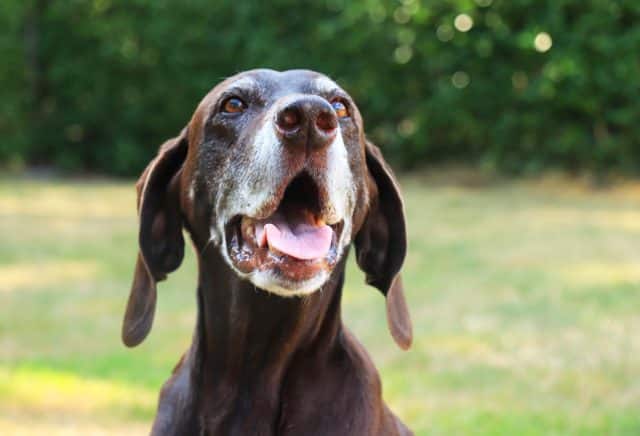
The German Shorthaired Pointer
Meet the "Everyuse" dog breed

A few years back, a well-know kennel ran an ad with a series of photos showing their dogs pointing birds in the field, doing agility, competing in the show and obedience rings, and, best of all, sitting happily at a child’s birthday party, wearing a silly pointed hat. Their German Shorthaired Pointers, they boasted, could do anything.
GSP owners would likely agree with this claim, although most early fanciers were thinking less about their dogs’ ability to make small talk at social occasions and more about practical skills like pointing, flushing, trailing, and retrieving game.
In 1929, C.R. Thornton, wrote: “As a breed, the German all-purpose dog will do it all and do it well.” Thornton’s article in the American Kennel Gazette was titled “Meet the ‘Everyuse Dog,’” and in it he praised the breed for being willing to take on any challenge and adapt to any situation.
EvaHeaven2018/Bigstock
“I have never attempted hunting anything from a mouse to a moose, that they were not ready and willing to assist…Good disposition. Love to be caressed. Take kindly to children, and show almost human intelligence in looking after small tots. As companions and pals, they are next to man…I find them a sensible, intelligent watch dog…they are the greatest all-around dog ever produced.”
Not really surprising, since versatility was exactly the characteristic that the developers of the breed were seeking.
In the mid-1800s, there were a number of specialist hunting breeds that excelled at their own particular tasks: pointers and setters to seek out and point birds in open country; retrievers to find and bring back the downed game; hounds to track over distance; and spaniels to hunt in cover and “flush” or drive out the quarry. This specialization was fine as long as the hunter could afford to own a kennel full of different dogs. If you were an ordinary citizen with just one or two dogs, however, you needed those dogs to perform a variety of jobs out in the field and then watch over the home and be a family dog as well.
Most Popular Dogs in the US
According to the most recent AKC registration statistics (2022)
[1] French Bulldog
[2] Labrador Retriever
[3] Golden Retriever
[4] German Shepherd
[5] Poodle
[6] Bulldog
[7] Rottweiler
[8] Beagle
[9] Dachshund
[10] German Shorthaired Pointer
A Hanoverian prince, Albrecht Zu Solms-Bronfels, in what is now part of Germany, made the creation of such an all-around dog his passion. Exactly which breeds the prince and other early enthusiasts used to create the GSP is not known; most likely a blend of the old German Bird Dog with other sporting breeds and hounds of the time, with a final dash of English Pointer for style. By the late nineteenth century, the breed type was more or less set; paintings from this time feature GSPs virtually indistinguishable from the Westminster Kennel Club Best in Show winner in 2005, Ch. Kan-Point’s VJK Autumn Roses.
The GSP’s adaptability serves him well in modern times, when the only pointing and retrieving most dogs are required to do are pointing at the door at potty time and retrieving tennis balls at the park. While the breed is not a good choice for a couchpotato owner in a small apartment, GSPs can fit into a variety of situations as long as they are given sufficient activity for body and brain. Owners who run, hike, bike, or are involved in agility will find the GSP a perfect companion.
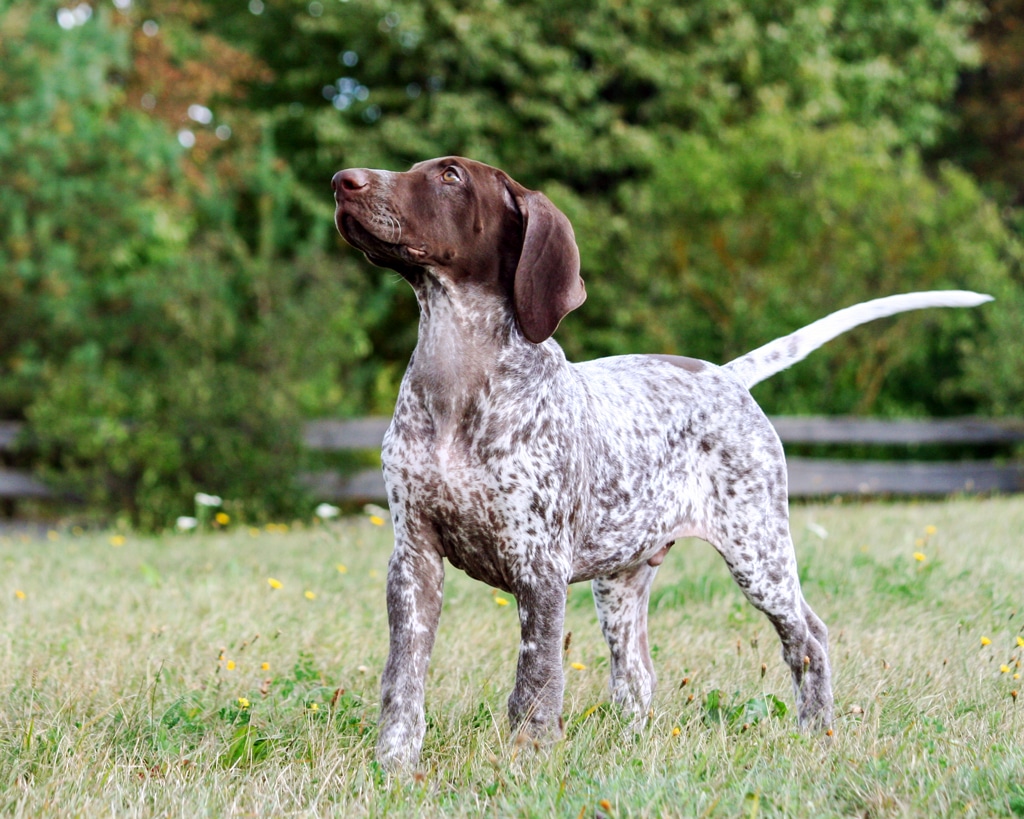
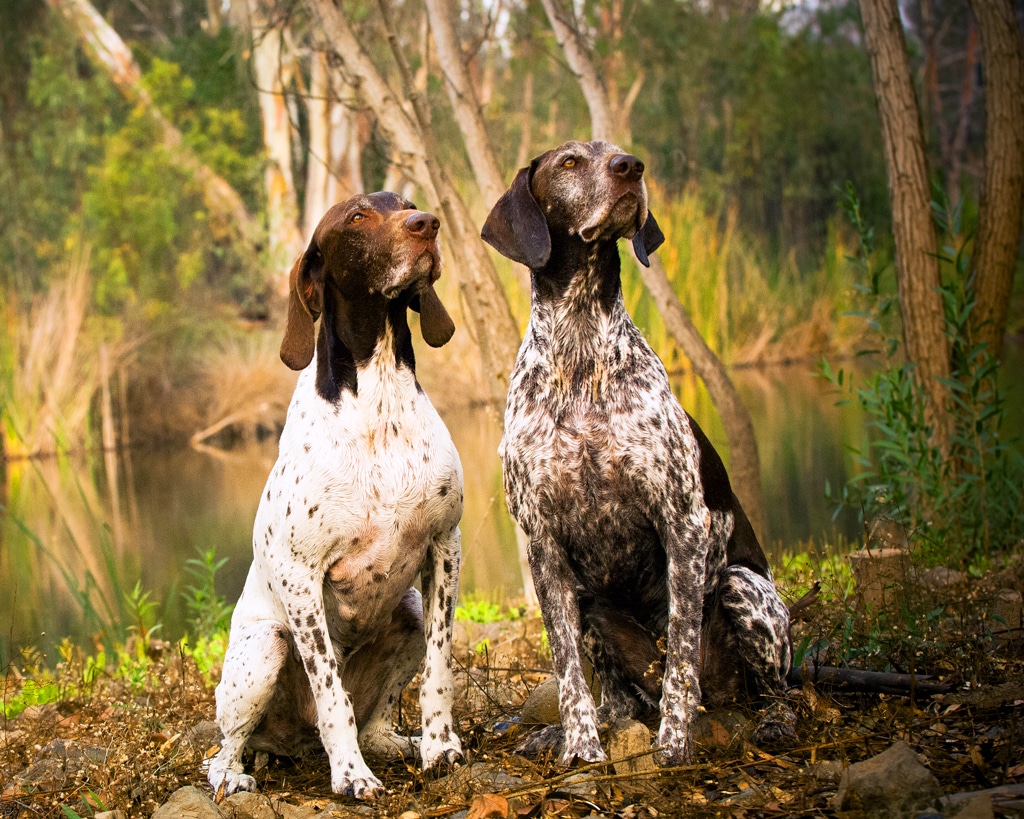
The Shorthair’s low-maintenance coat should be solid liver in colour or a combination of liver and white. Solid black and solid white are not permitted under American Kennel Club rules. A weekly rubdown with a hound glove should be all that is required to keep the coat in good condition.
everydoghasastory/Bigstock
At 21 to 25 inches, the GSP is a medium-sized dog comparable in height to the Labrador Retriever but of lighter build. In North America, the tail is usually docked to about 40 percent of the original length; in many places around the world, docking is now illegal and GSPs are wagging long, natural tails again.
The breed is generally healthy with few genetic problems and a good life expectancy of up to 15 years. As with all floppy-eared dogs, ear infections may crop up, so it is important to check ears regularly and keep them clean and dry.
The German Wirehaired, the German Longhaired, and the German Shorthaired Pointers are not varieties of one breed; although they do share part of their names and a Teutonic background, they are three distinct breeds with different personalities.
With its sleek good looks and eager-to-please personality, the GSP is making it onto more and more of the most sought-after invitation lists and is now among the top twenty most popular breeds in the U.S. At the same time, it has maintained its reputation as a top-notch working dog, with more AKC pointing dog championships awarded to Shorthairs than to any other breed.
And that, say lovers of the “everyuse dog,” is something to party about.
» Read Your Breed For more breed profiles, go to moderndogmagazine.com/breeds
Join the newsletter and never miss out on dog content again!
"*" indicates required fields
By clicking the arrow, you agree to our web Terms of Use and Privacy & Cookie Policy. Easy unsubscribe links are provided in every email.