The Bulldog
A very flashy dog breed; bulldogs are very proud and very noble
It has been the nemesis of a couple of cartoon felines, the corporate logo of a heavy-duty truck company, the mascot of University of Georgia sports teams, and was used to characterize a World War II national leader.
The Bulldog, also known as the English Bulldog, has enjoyed immense popular exposure during the past century. Television cartoon cats Tom (Tom and Jerry) and Sylvester (Bugs Bunny) often matched wits with arch-enemy Bulldogs. Characterized as “the British Bulldog,” Sir Winston Churchill was a man who led his country through one of its most difficult periods ever with all the determination of his steadfast and loyal namesake. And you’ll find an image of the affable animal embedded on the front of every Mack truck.
But the modern Bulldog has far deeper roots. Shakespeare refers to bulldogs in his play King Henry VI. Throughout medieval, Elizabethan and the early industrial periods, “bulldogs” were common, general-purpose working dogs used to help control oxen (indeed, they were often referred to as “butcher’s dogs”), and as guards of home and property, as hunters, and to provide the main attraction in the then-popular spectator sport of bull-baiting. The modern breeds most true in form to these early working dogs are embodied in the current-day Pit Bull and affiliated breeds. The tough, game little dogs would often face opponents much larger than themselves, predominantly bulls-or bears, before these were exterminated in the wild-in the ring. They would dart in, grab the tender nose of a maddened bull, and hang on for dear life. Much athleticism, courage, and persistence (and luck) were required in order for a dog not to be gored or crushed.
When bull-baiting became illegal in England in 1835, the working bulldog went into a decline. Within twenty years, it had almost died out. Then in 1874, the Bulldog Club was launched by a group of fanciers in an attempt to save the breed. There was much debate among aficionados regarding the standard to be followed. Pugs were interbred with the working dogs. The end product was a dog with with the same name, but with a look substantially altered from the original. The modern Bulldog was born. In 1886, the breed was recognized by the American Kennel Club.
Most Popular Dogs in the US
According to the most recent AKC registration statistics
[1] French Bulldog
[2] Labrador Retriever
[3] Golden Retriever
[4] German Shepherd
[5] Poodle
[6] Bulldog
[7] Rottweiler
[8] Beagle
[9] Dachshund
[10] German Shorthaired Pointer
Once the dog began to appear in the show ring, utility was no longer a primary focus. In fact, affluent Victorians preferred to have animals that were markedly different from the more functional types kept by commoners. Dogs became status symbols rather than workmates. Bulldog breeders concentrated on developing a more exaggerated look, and-perhaps due to its “disreputable” blood-sport origins-emphasizing the breed’s more peacable and benign, in some ways almost clown-like, qualities. As a result of its appealing look and affable temperament, the Bulldog has since become one of the most popular show dogs in the world.
“They are a very flashy breed; they are very proud and very noble,” says Kandie Kroonen, proprietor of Iroc Bulldogs near Edmonton, Alberta. Kroonen, who has been breeding English-style Bulldogs for the past eight years, has seen her dogs capture multiple victories at Canadian Kennel Club national championships.
“I like showing them because they are really proud. They really show off; they know they are cool,” Kroonen said. “One of my dogs, Ocean, thinks he’s God’s gift. He struts around, with a ‘yeah, I’m cool’ attitude. He likes to look up ladies’ skirts and if he doesn’t like you, he’ll turn around and show his butt.
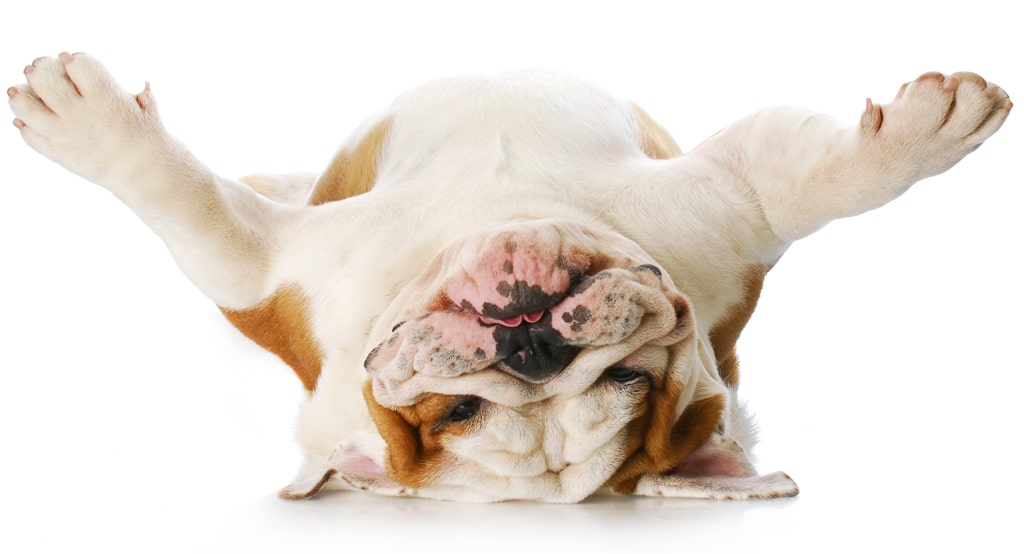
“They are like little human beings. They are fabulous with children, they are comical and they do things no other dog can do. They snore, they pass gas. They are always very proud of what they can do.”
Willee Cole/Bigstock.com
(I must insert that my own Golden Retriever seems to be quite capable of both snoring and gas-passing, though perhaps not to the same exceptional degree.)
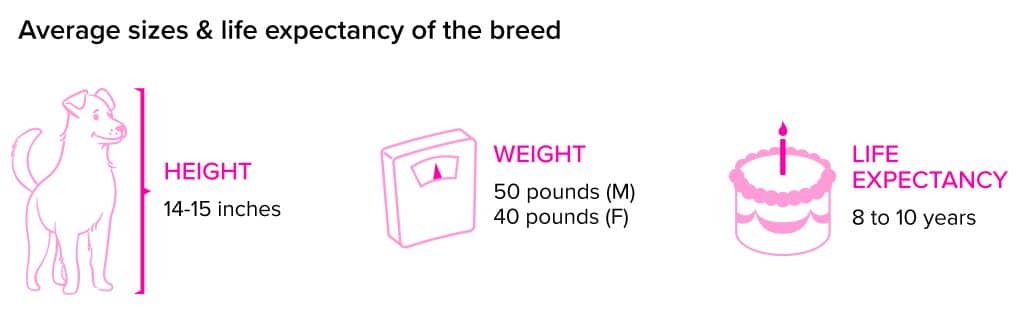
Small in stature, but wide and compact with a thick, massive head, the Bulldog is about 12 to 16 inches in height, with males weighing about 50 lbs. (Females are usually somewhat smaller.) Although its appearance can be somewhat intimidating, it is among the gentlest of dogs. Affectionate and dependable, it is tolerant and mild-mannered with children. Yet, true to its heritage, it is also known for its courage and excellent guarding abilities. A Bulldog will see off suspicious intruders in short order-and few would risk a close encounter with the descendant of any animal brave enough to face an enraged bull.
It is a good choice for apartment dwellers and with regular walks can easily adapt to life without a yard. “The Bulldog is ideal for busy people, because the dog is plain lazy. They are good for people who don’t have a lot of time for exercise,” says Vickie Lepore of KullectaBull Registered English Bulldogs in London, Ontario. “They’re so laid back.”
Vicki says, “For the single man, having a Bulldog means you’re very cool. They are still a muscle dog. But for the family man, you’re getting a smaller dog that your wife or family can handle. And they are great with other animals and they’re so good to children. . . . In my eyes all Bulldogs are perfect.”
Unfortunately, the Bulldog’s health isn’t always perfect. With narrow windpipes and flattened nasal passages, some individuals experience breathing problems. Dogs often also have poor eyesight and are susceptible to skin infections and hip and knee problems.
The breed has a short average life span of just eight years, though many live beyond that. It does best in temperate climates, as it can chill easily in cold weather and has trouble cooling off in hot temperatures.
Care should be taken not to overfeed a Bulldog, not only because it would prefer to sleep rather than exercise and its being overweight will compound skeletal problems, but its digestive system is quite active and may be offensive to people with sensitive noses.
Of course, there is the snoring, and most Bulldogs slobber and drool.
But despite its shortcomings, the English Bulldog remains a very popular breed-maybe a little too popular for Kandie Kroonen. “Unfortunately they have become too common a breed,” she says. “You see them on TV on The Osbournes and in movies like Little Nicky. But there are a lot of people breeding them that don’t understand them. You have to be really cautious who you’re buying from. Financially they are for the upper class. You shouldn’t touch a puppy for under $2,000.”
According to Lepore, who’s bred them for six years, few Bulldogs are mated naturally on this side of the Atlantic Ocean. “They don’t breed English Bulldogs naturally in North America. Nearly 90 per cent of the Bulldogs here are artificially inseminated. They are too short-bodied and get too winded. All [those] I know of in Ontario were artificially inseminated.”
Lepore also says puppies are often delivered by Caesarian section because of their broad heads. “Many of them have to be C-sectioned at birth. Not all of them-there are quite a few nowadays that will deliver naturally-but because of complications many are delivered through C-section,” she says. Lepore admits all her dogs are delivered by Caesarian.
Despite obvious problems with delivery, the broader the head of a dog, the more prized he is likely to be in shows.
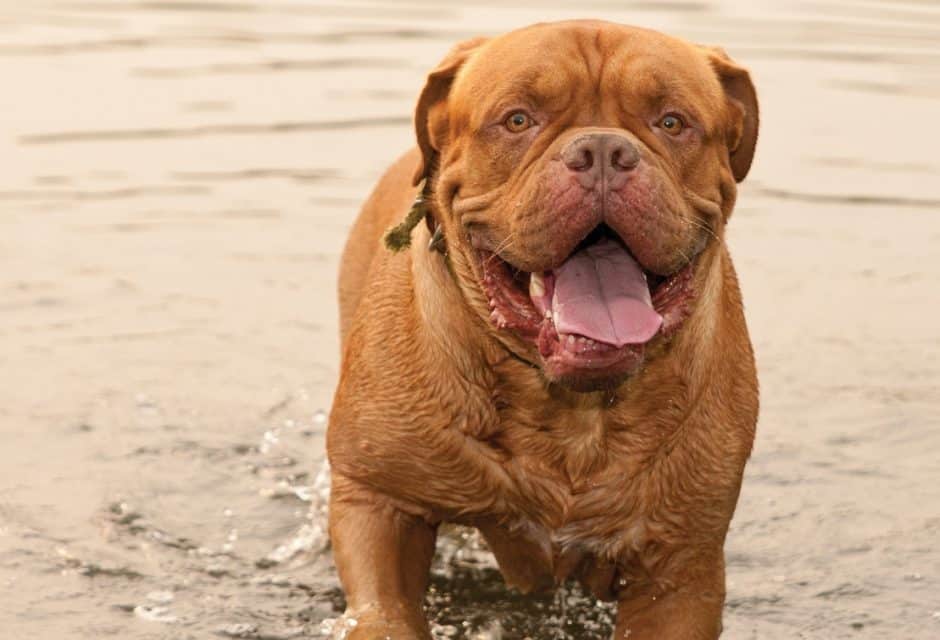
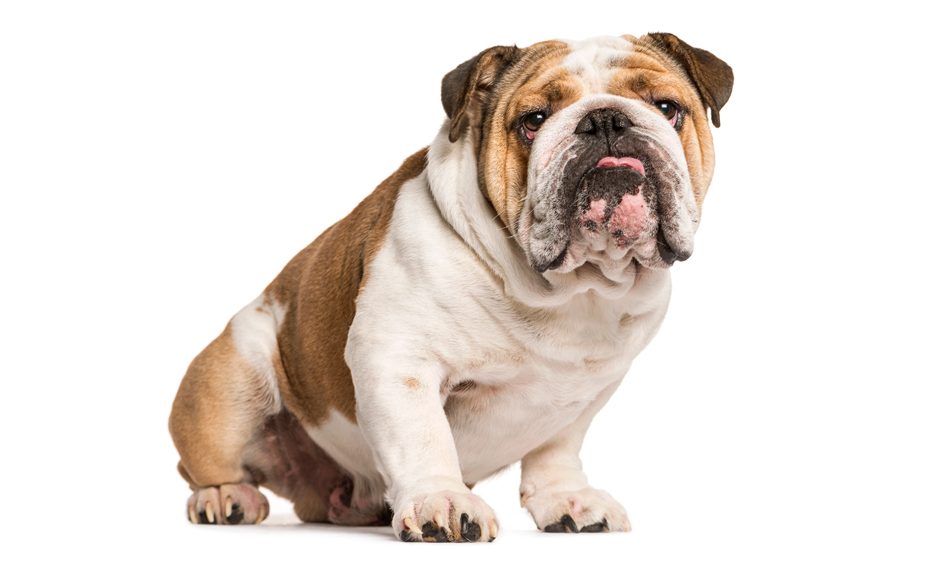
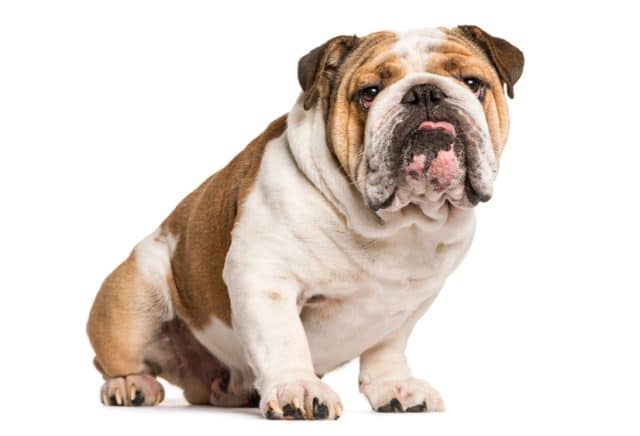
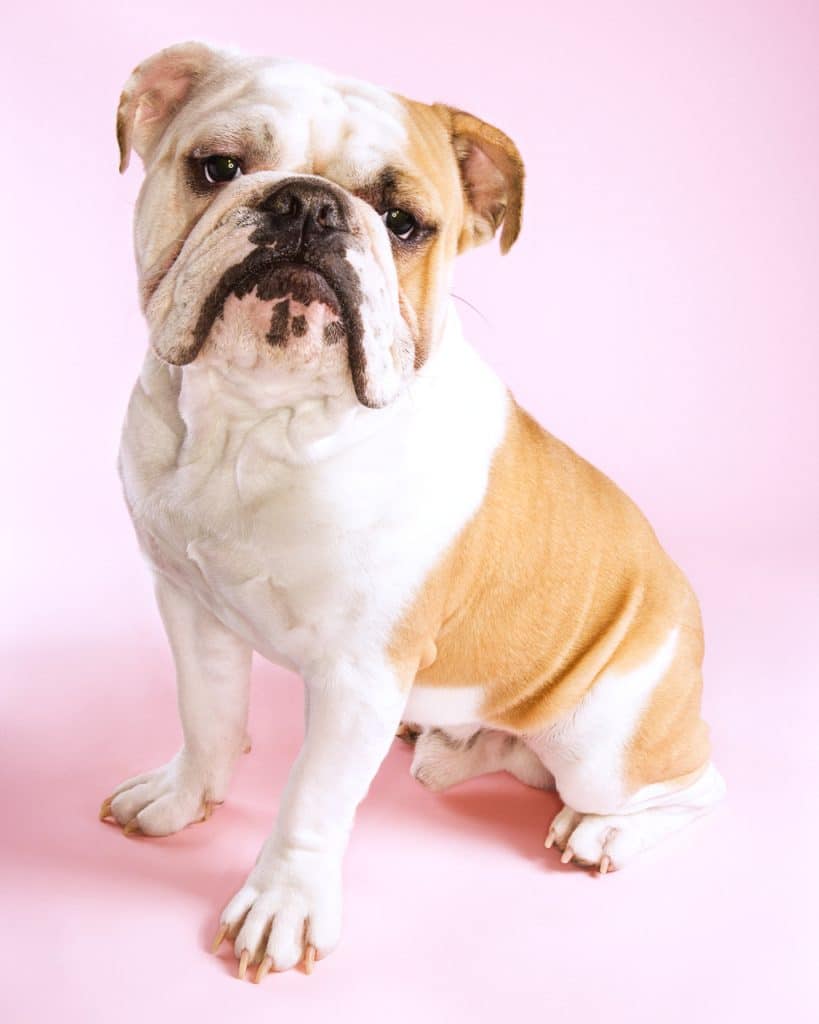
The Bulldog standard calls for the muzzle to be extremely short, with the nose broad and black and having large nostrils. The skin on the skull and forehead should fall in dense folds. The upper lip is pendant and the lower jaw is undershot. The dark eyes are very round and far apart. The ears should be small and thin, folded back in the form of a rose. The tail is short and carried low.
Iofoto/Bigstock.com
The coat comes in uniform red, fawn, brindle, pale yellow or white, or piebald. The general appearance and attitude of the dog should suggest stability, vigour and strength. With its stocky legs set squarely at each corner of its compact, muscular body, the Bulldog’s deliberate gait has a shuffling, sideways motion, with a characteristic “roll.”
Those characteristics fit Kroonen’s first show dog, Buford, to a tee. The Edmonton breeder has fond memories of the national multi-award winning Bulldog. “Buford was a very special boy,” Kroonen says. Unfortunately, Buford died in a car accident near Estevan, Saskatchewan, two years ago. “Buford was killed because he was not restrained,” Kroonen recalled. “We were out on a road trip with the dog to meet another breeder. He was loose sitting on the front passenger seat when we swerved into a ditch. He was killed instantly.” Since the tragedy, Kroonen has been advocating dog safety in automobiles.
While little is going to save an unrestrained dog in such circumstances, the Bulldog, unlike many breeds, has the steady, stolid temperament that makes it an unlikely candidate for actually causing an automobile accident through its antics. This is a relaxed and easy-going dog that will appeal to the couch potato in us all.
» Read Your Breed For more breed profiles, go to moderndogmagazine.com/breeds
Join the newsletter and never miss out on dog content again!
"*" indicates required fields
By clicking the arrow, you agree to our web Terms of Use and Privacy & Cookie Policy. Easy unsubscribe links are provided in every email.